"Do You Like Durian?": Why Culture Fit Matters More Than You Think

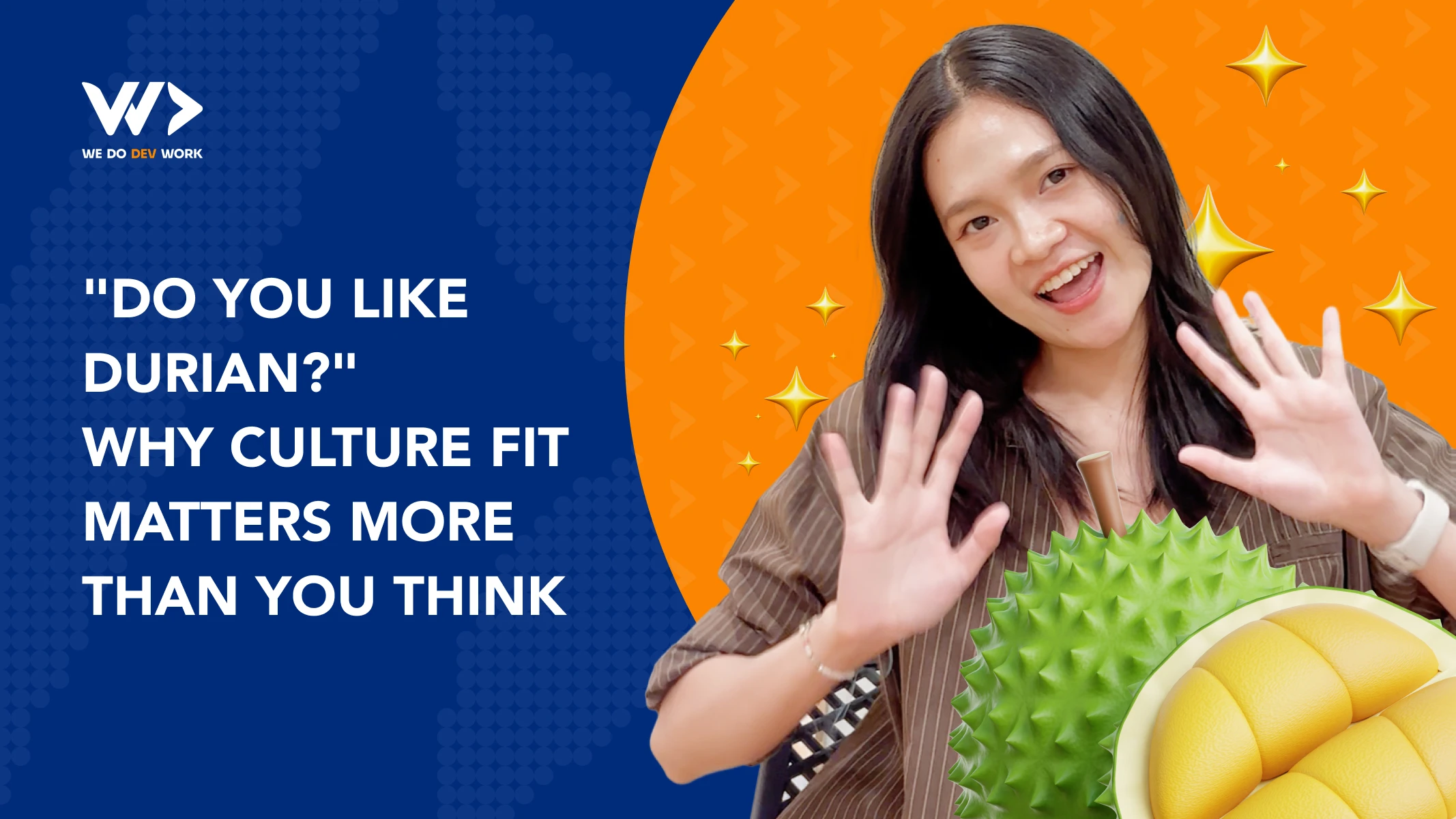
"Do you like durian?"
No, it's not a trick question.
And no, your answer won't determine entirely whether you get the job or not.
As an HR, I've asked candidates all sorts of unexpected questions during interviews.
"Can you play any instruments?"
"What's your favorite hobby?"
"Do you have any pets?"
Sometimes candidates laugh, sometimes they look totally confused.
If you've ever wondered why I ask those questions, here's the answer: I'm not looking for the "right" response, I'm simply trying to get to know the person behind the resume.
Looking beyond skills
When hiring, technical skills and experience are important. They tell us whether someone can do the job.
But interviews are also about understanding how someone works and whether they'll genuinely enjoy being part of the team.
That's why one question we always ask is:
"What type of environment do you want to work in?"
There is no perfect answer.
Some people thrive in fast-paced environments with lots of ownership. Others prefer structure, clear expectations, and stability.
Neither is better than the other.
The goal isn't to convince someone to fit into our culture, but to discover whether we're the right fit for each other.
More than just a hiring philosophy
One question our CEO almost always asks is:
"What will you bring to the table?"
I love this question because it shifts the conversation.
Instead of focusing only on what the company can offer, it encourages candidates to think about the value they'll bring to the team.
That mindset reflects something our CEO once said that has stayed with me ever since:
"I'd rather have 50 people who genuinely enjoy working together than 150 people who can't stand each other."
To me, that isn't about company size.
It's about building a workplace where people respect one another, communicate openly, and enjoy working together.
Because skills build products, but people build companies.
So... Why the random questions?
The random questions aren't just my interviewing style, they're part of our culture: our team just loves asking random questions.
One moment we're discussing a project, and the next someone asks, "Have you watched The Odyssey?" or "Can you do yoga?"
Those conversations happen naturally because we're genuinely curious about one another.
So when I ask candidates unexpected questions, I'm simply inviting them into the kind of conversations we have every day.
I'm not really judging whether they love durians or own a cat.
(of course cat lovers are better candidates than dog lovers and durian is the king of fruits - but that’s not a discussion, right)
I'm curious to see how they respond:
Do they laugh?
Do they tell a story?
Do they ask a question back?
Do they ignore the question?
Do they feel uncomfortable?
Sometimes those few minutes tell me more about a person than all the other questions about their resume.
And occasionally, they also tell us something else.
If a candidate feels that those conversations are too random or not the kind of workplace interaction they enjoy, that's okay too.
It doesn't mean they're a bad fit for the role.
It may simply mean our culture isn't the environment where they'll feel most comfortable and that's just as valuable for both sides to discover.
Why does this matter?
I've learned that hiring isn't about finding people who are exactly like us.
It's about finding people who will enjoy growing with us while bringing something unique to the team.
Every interview is a two-way conversation, where we're learning about the candidate and the candidate is learning about us.
And maybe...
Just maybe...
It all begins with a very unexpected question.
"So... what do you think about durian?"
Related articles
.NET vs. Java in 2026: Here we go again
.NET vs. Java in 2026: Compare performance, concurrency, frameworks, memory management, and key differences to choose the right platform for your project.


Python vs Node.js: Which One Should You Use?
Python vs. Node.js: Compare their strengths, ecosystems, performance, AI capabilities, and use cases to choose the right backend technology for your project.

So, what's going on at WDDW?
A look at what’s been happening at We Do Dev Work: team growth, new AI and e-commerce projects, internal products, white-label partnerships, and building a company that’s becoming less dependent on its founder.

Ready to take your business to the next level.
Partner with a professional team that turn ideas into powerful business experiences and scales with your growth.