
Hotel Website in Thailand: What It Needs to Win Direct Bookings (and What It Costs)

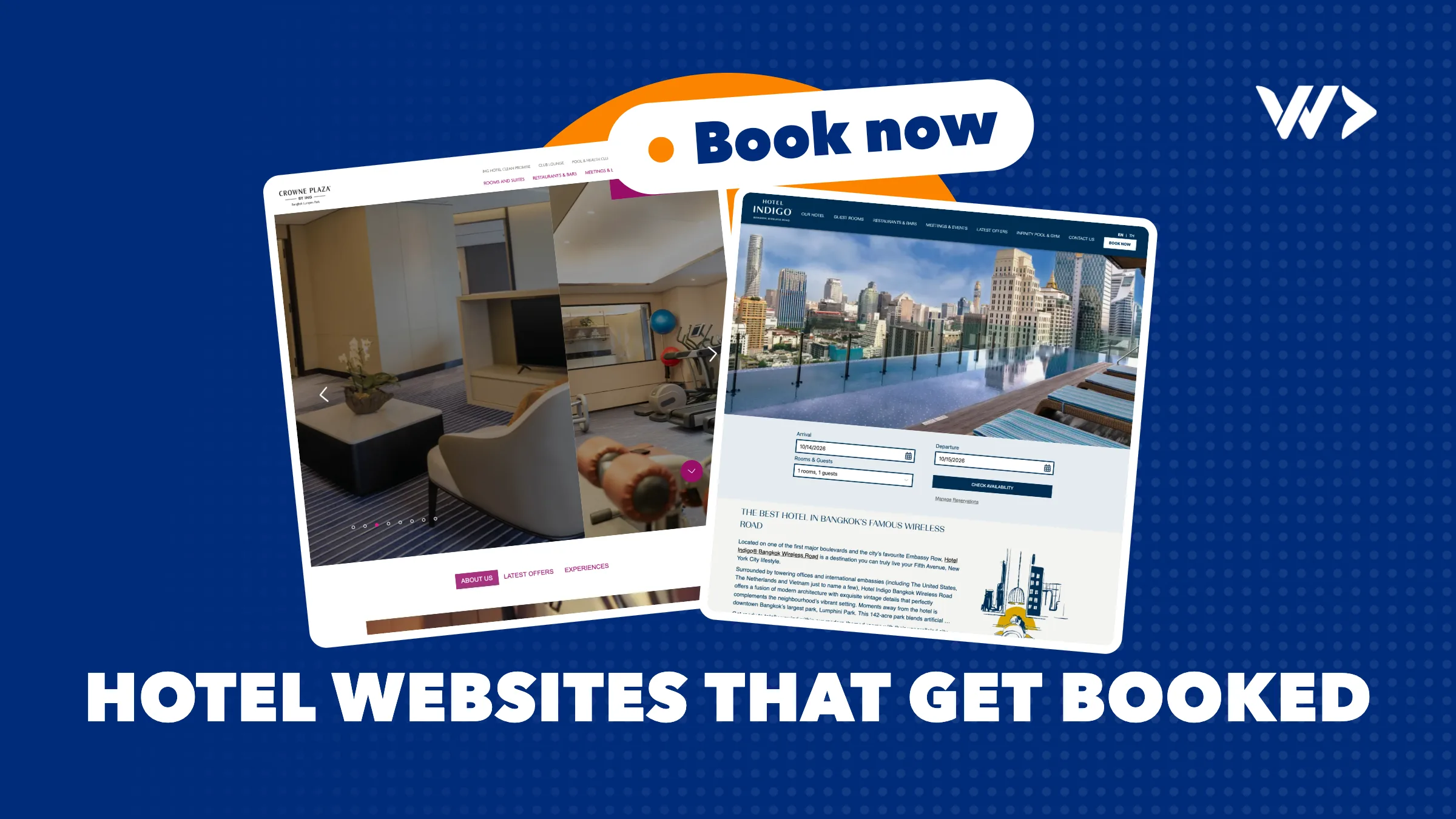
Many hotels in Thailand get much of their business through online travel agencies. That is fine for reach, but every one of those bookings costs you commission, and the guest's details stay with the platform. Your own website is the one place where a guest can book you directly. This guide explains what a hotel website needs to win those direct bookings, what we have built for hotels, and what it costs.
Why your own website still matters
Many guests don't book the first time they see a hotel. They compare on a booking platform, then search for the hotel's name to look at the rooms, the photos and the location. If your website is slow, outdated or only in one language, that is where you lose them back to the platform. A good website turns that search into a direct booking:
- No commission on bookings that come in directly.
- Your guest relationship: you get the guest's details, so you can welcome them and invite them back.
- Your story: rooms, restaurant, spa and neighbourhood presented the way you want, not squeezed into a platform template.
What a hotel website needs
From the hotel websites we have built, these are the parts that matter most:
- A booking search above the fold. Dates and guests right on the homepage, linked to the booking engine you already use, so a guest can check availability in seconds.
- A page per room type. Good photos, size, beds, view and what is included. Guests want to see exactly what they book.
- Dining, spa, meetings and events. Each with its own page. These are often searched on their own, and they sell the stay.
- Offers. A clear page with your packages and promotions, which you can update yourself.
- The guest's languages. At least Thai and English; many hotels add Chinese, Japanese or others for their main markets.
- Location and neighbourhood. A map, how to get there and what is nearby.
- Fast on a phone. Most guests look you up on their phone, often while travelling.
- A CMS. Your team changes rates, offers and photos without calling a developer.
Hotel websites we have built
Three examples from our portfolio, from one hotel to a group with properties in four countries:
| Project | What we built |
|---|---|
| Crowne Plaza Bangkok Lumpini Park (IHG), 2023 | A custom Next.js frontend with pages for rooms and suites, four restaurants and bars, meetings, weddings and offers, in English, Thai, Japanese and Chinese, with a booking search on the homepage. |
| Hotel Indigo Bangkok Wireless Road (IHG), 2024 | A custom Next.js frontend in English and Thai: guest rooms, restaurants and bars, meetings and events, the rooftop infinity pool, the neighbourhood and a 360° virtual tour, with an availability search right under the hero. |
| Compass Hospitality, 2024 | The complete group website: hotels and resorts in Thailand, the United Kingdom, Malaysia and Sri Lanka, with destination pages, offers, dining, spa and events, a travel blog and pages for travel trade and hotel owners, in seven languages. |
What a hotel website costs
A hotel website can be a fixed package or a custom build. Which one fits depends on how many properties you have, how many languages you need and how much the design must follow a brand guide.
| Option | What you get | Price |
|---|---|---|
| Website package Pro | Up to 10 pages in your brand, Thai and English, CMS, mobile-ready, basic SEO, plus a rooms and rates section. Live in about two weeks after we receive your content. | ฿49,995 |
| Extra language | The whole site in one more language, for example Chinese or Japanese. | ฿6,500 per language |
| Care | Hosting, SSL, backups, updates and monitoring. 12-month minimum. | ฿1,990 / month |
| Custom build | For hotel brands and groups: your own design system, several properties, many languages, integrations. | Quoted per project |
Prices exclude VAT. You own the code and designs we make for you.
How to choose
- One independent hotel or resort: the Pro package gives you a professional site with rooms and rates in about two weeks, at a fixed price.
- A hotel that must follow a brand guide: a custom frontend, like the ones we built for Crowne Plaza and Hotel Indigo.
- A group with several properties: one website with a page per hotel and per destination, like Compass Hospitality, so guests can move between your properties instead of leaving for a platform.
Not sure what your current website is missing? Our free website check asks a few questions about your hotel and shows what would help, with a price.
Frequently asked questions
How much does a hotel website cost in Thailand?
With us, a hotel website of up to 10 pages in Thai and English, with a rooms and rates section and a CMS, costs ฿49,995, plus ฿1,990 a month for hosting and care. Hotel brands and groups with several properties get a custom quote. Prices exclude VAT.
Can my website connect to my booking engine?
Yes. A booking search on your homepage can send guests straight to the booking engine you already use, so they can check availability and book directly.
Which languages should a hotel website have?
At least Thai and English. Add the languages of your main markets; the hotels we built for use up to seven languages. Each extra language costs ฿6,500 in our packages.
How long does it take to build a hotel website?
Our Pro package is live in about two weeks after we receive your content (logo, texts and photos). A custom build for a hotel brand or group takes longer and is planned per project.
Can my team update rates and offers themselves?
Yes. Every website we build comes with a CMS, so your team can change rates, offers, texts and photos without a developer.
Related articles
My WordPress Website Went Offline: What to Do Now (Checklist)
WordPress site down? Match the error you see to its cause and fix it step by step: domain, hosting, SSL, database, critical errors, maintenance mode and hacks.


How Much Does a Website Cost in Thailand in 2026? A Clear Price Guide
What a business website in Thailand really costs in 2026: what drives the price, your options compared, the yearly costs, and our published prices.

SEO for a digital product: it starts long before you write your first article
SEO doesn't begin after your website launches, it starts during product development. Discover why product research, technical SEO, and content strategy should work together from day one to create digital products that solve real customer problems and perform better in search.