
Case study: Puriphy Shopify App

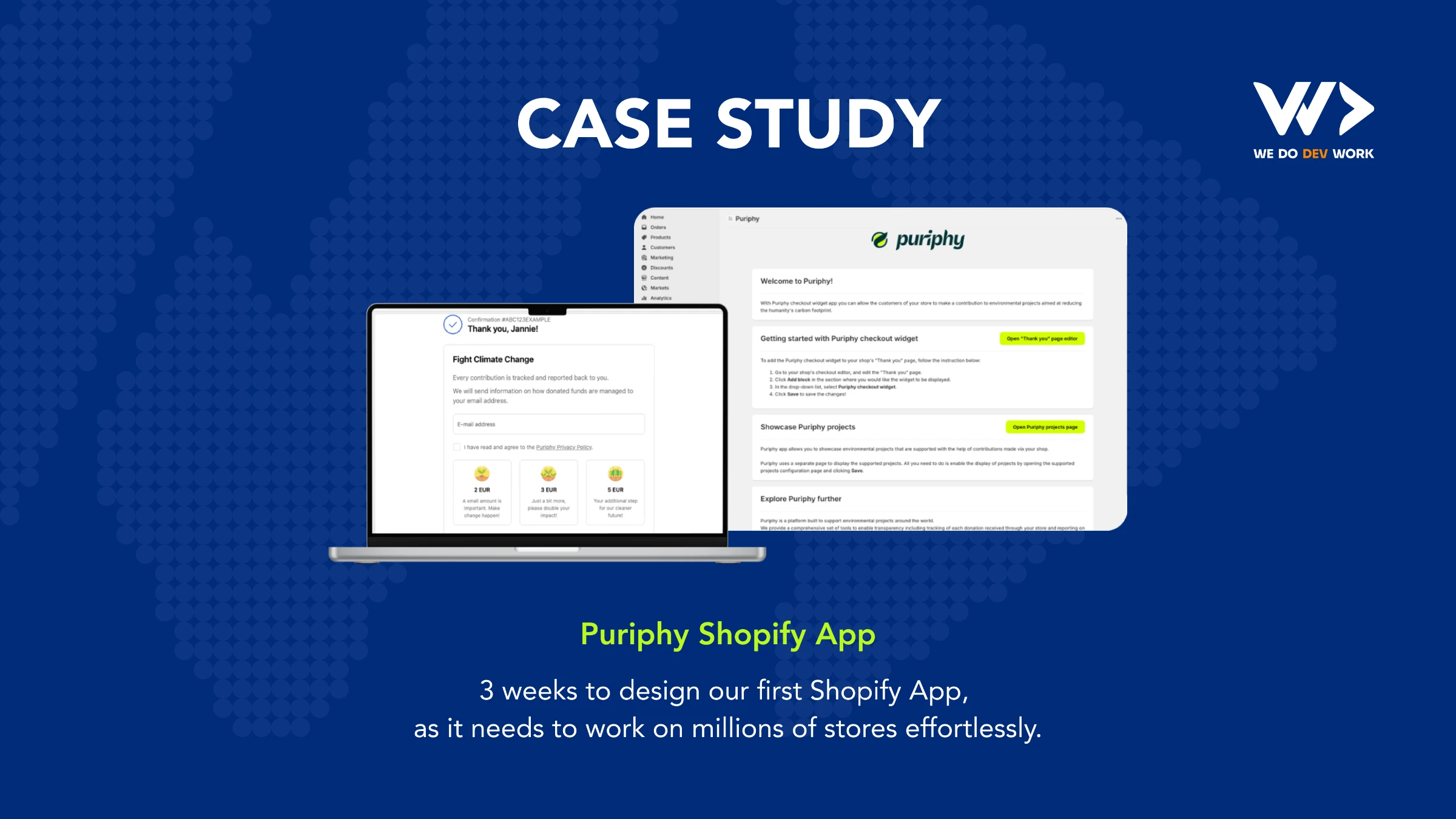
We live on a beautiful planet, which we need to protect. Global warming caused by human emissions has resulted in rising sea levels, wildfires, and the disruption of ecosystems all over the world. That’s where Puriphy wants to make a difference. Puriphy is the direct link between online retailers, their clients, and verified climate projects.
Shopify has over 4.82 million active stores worldwide, almost 5 million daily active users and continues to grow! Which is why it is a must for Puriphy to enter this market. That’s where they contacted us, We Do Dev Work, to build a Shopify app and seamlessly integrate the Puriphy widgets into the Shopify ecosystem.
We’ve built many Shopify stores before with default themes and our in-house developed themes. Using Liquid, JavaScript and dozens of Shopify app integrations. But building an actual app ourselves was a first. Our goal now was to build something that can be integrated in many different stores and still work well within those environments.
Our approach
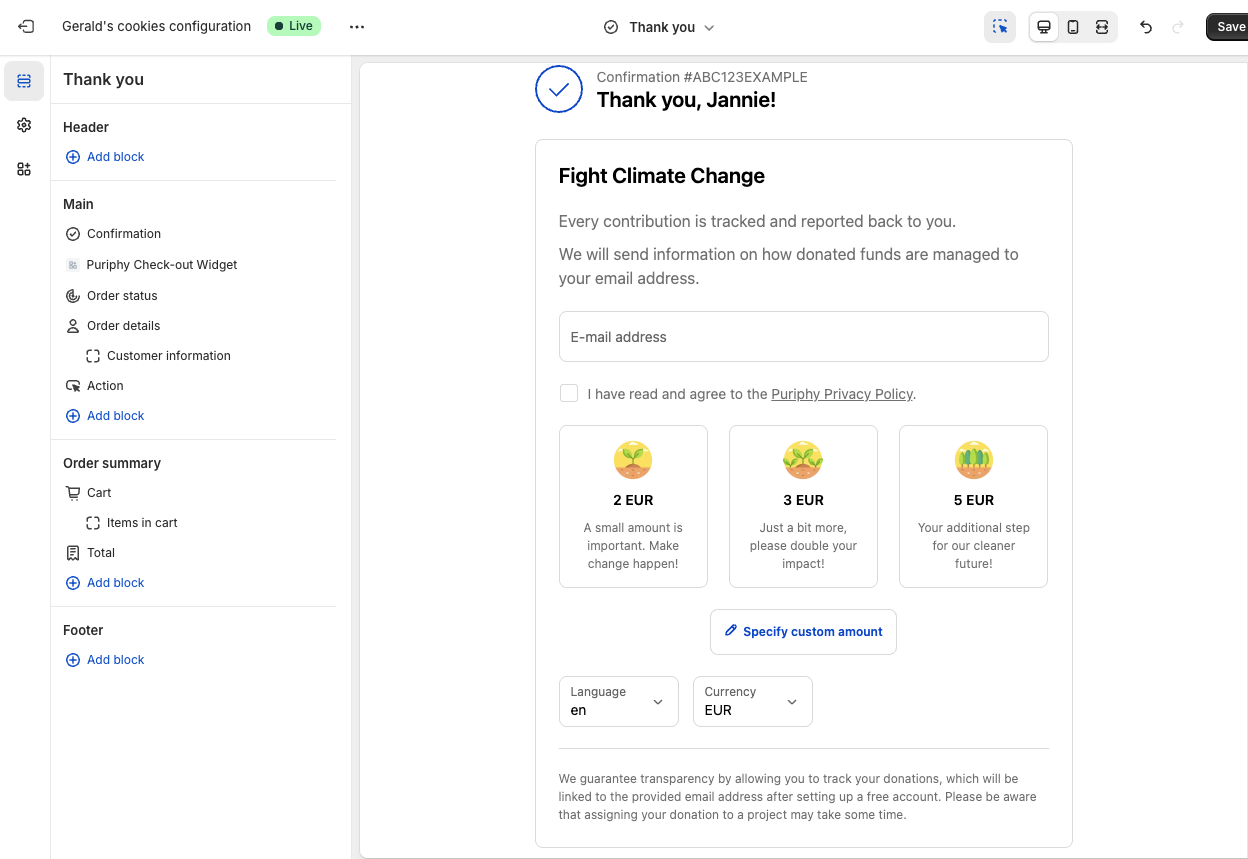
It became clear quite quickly that building an app isn’t all that hard, download the template through the CLI, deploy the demo app to a partner account and start building. With some basic Liquid and React knowledge, and researching their API, we were able to quickly come up with some basic Shopify building blocks that users can add to their store.
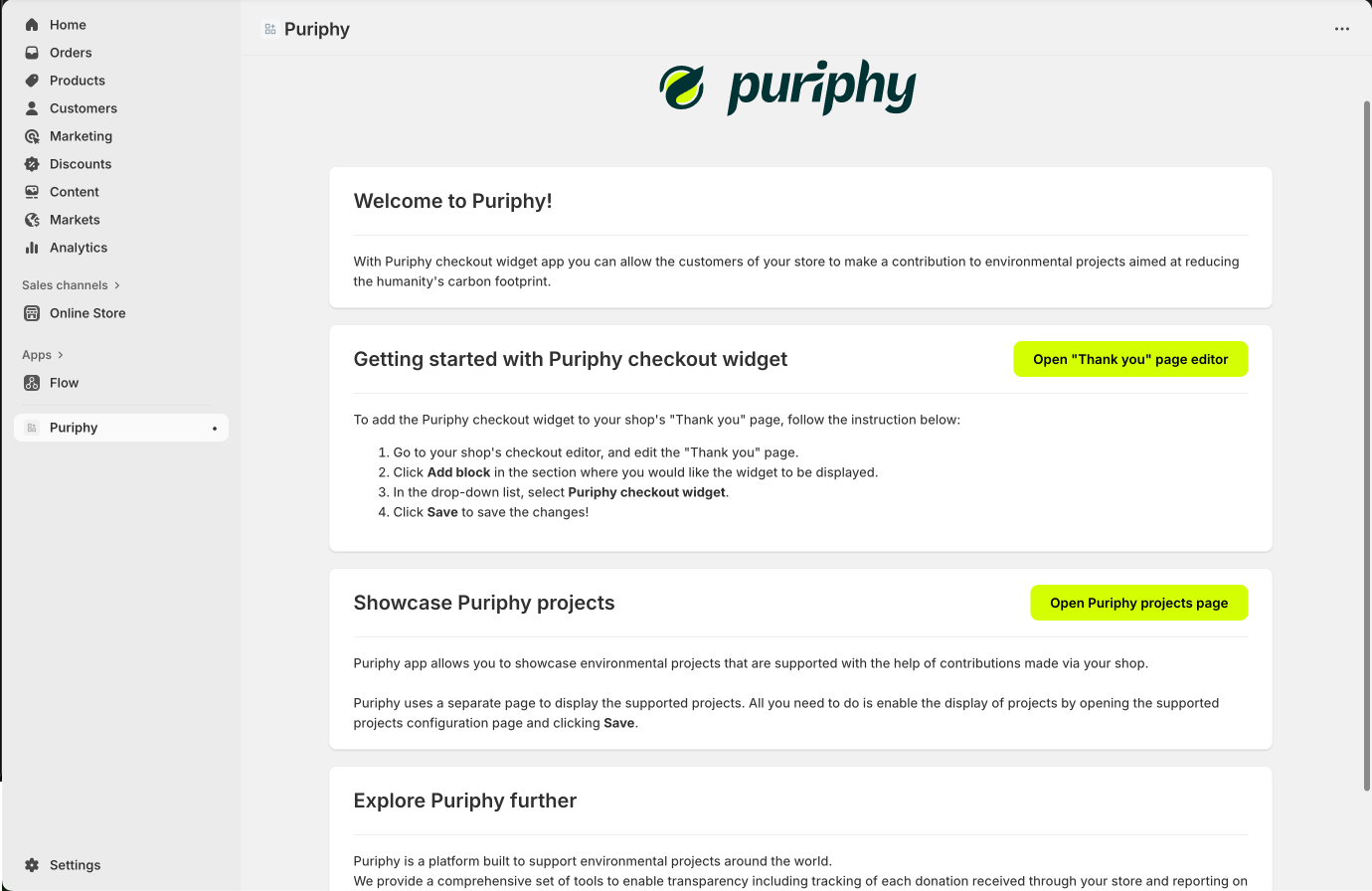
We then developed the app dashboard itself: a simple to use UI explaining all the features and guiding the user through the installation process. Shopify has restrictions on what an app can do to someone’s store, which meant we had to be creative with the Shopify API. I think that was the biggest challenge, to find an alternative feature in the API for each component of our app.
Lastly, we implemented the backend routes to connect the user’s Shopify account with the Puriphy backend system. Once all was working, it was time to submit the app for the Shopify app store.
What we learned
Shopify is not for everyone. There is a learning curve, especially since the Shopify API features aren’t that cohesive and often feel like learning an entirely different thing. It’s also tricky to keep up with the versions, during development, some key elements had already changed, causing us some painful debugging sessions. But the good thing is that once you understand their setup, it’s relatively easy to add new features to an app.
Collaborating with Puriphy went very well, they genuinely put their cause first and even though we had to go back-and-forth with their development team to add backend features that support our app, we successfully delivered a first version within three weeks.
Related articles

SEO for a digital product: it starts long before you write your first article
SEO doesn't begin after your website launches, it starts during product development. Discover why product research, technical SEO, and content strategy should work together from day one to create digital products that solve real customer problems and perform better in search.


How we take total control of our operations at WDDW
As WDDW grew, so did our SaaS costs. Here's why we built our own internal tools, and how they improved efficiency, reduced costs, and gave us full control.


How we rescue software projects that went off track
Software project stuck or failed? Learn our 5-step process for rescuing troubled projects, without throwing away your investment. See real case studies.
Ready to take your business to the next level.
Partner with a professional team that turn ideas into powerful business experiences and scales with your growth.