

You cannot get around it these days anymore; AI is everywhere. We see ads for AI hiring on LinkedIn, there are AI IDE’s, AI features within workspaces, AI content tools, AI wants to help us write a ticket, and we can even develop apps with AI no-code platforms.
We get it, a lot of people invested in the AI market, and the big companies want to see a return. And we too use AI on the daily, but we’re taking a step back.
Here’s why:
We don’t want to help train a model with our sensitive information.
Slack silently announced in their terms of service that they’ll be using all your data to train their AI models and improve the experience.
Read that again, they will push your private conversations into a data feed to train AI models. And they’re not the only ones doing it! Figma, Adobe, Cursor, Slack, and a bunch of others all train their models with your private data or intellectual property.
AI models still hallucinate and make mistakes.
When developing software, we work with sensitive information, large data sets, complicated architectures and a lot of secret credentials. Just like you wouldn’t commit an API key to GitHub, you shouldn’t provide access to an entire codebase containing these keys to an AI tool like Cursor.
Every line of code, whether it’s AI-generated or not, should be thought out carefully by a critical human mind. Without a reviewing process, there’s no accountability and big mistakes will happen.
Simplicity
Some things just don’t require AI to be done efficiently. If you cannot communicate a message clearly to your peers, asking an LLM to do it for you is inefficient, because the effort needed to convey the message to the LLM is equally difficult compared to the actual task at hand.
Instead, AI can be a tool to improve communication by providing instant feedback rather than being the medium of communication.
Hiring people manually is time-consuming, but AI doesn’t improve on the already existing ATS software systems out there. It provides yet another complexity to a tool that merely checks for keywords in a resume to rank applicants so that the hiring manager can interview the top X candidates.
In simple terms, we only use AI tools if these three conditions are met:
It doesn’t compromise our sensitive information.
The output can be manually adjusted and reviewed.
It improves our process.
At We Do Dev Work, we take a human-centered approach to enabling software development.
We make intelligent, scalable software that drives significant operational change.
Learn more: wedodevwork.com.
Related reading
Frequently asked questions
Why is We Do Dev Work cautious about AI tools?
They do not want to help train models with sensitive information, and AI still hallucinates and makes mistakes. The post notes several tools train on private data or intellectual property.
Does the company use AI at all?
Yes, they use AI daily but have taken a step back. They only use it when it does not compromise sensitive information, the output can be manually reviewed and adjusted, and it improves their process.
Why not give AI tools access to a whole codebase?
Codebases contain sensitive data and secret credentials, and just as you would not commit an API key to GitHub, you should not give an AI tool access to them.
Should AI-generated code be reviewed?
Yes. The post says every line of code, AI-generated or not, should be thought out by a critical human mind, otherwise there is no accountability.
Related articles
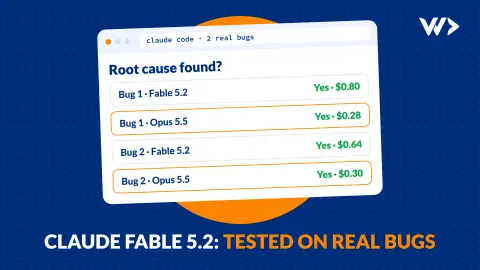
Claude Fable 5.2 Tested on Two Real Bugs: Is It Worth It?
Claude Fable 5.2 launched on 9 Nov 2026. We gave it and Opus 5.5 two real bugs from our own site: both found the cause, Opus at less than half the cost.

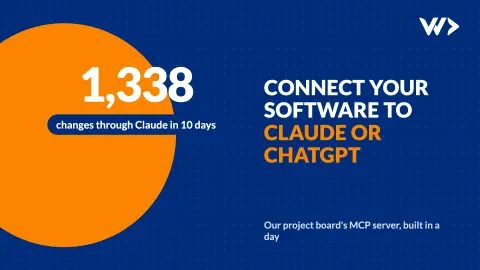
Connect Your Software to Claude or ChatGPT: What an MCP Server Takes
An MCP server lets Claude or ChatGPT read and update your own software. We built one for our project board in a day: 1,338 changes in its first 10 days. How it works and what to get right.
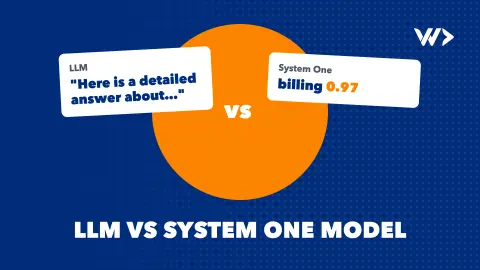
LLM vs System One Model: Claude and ChatGPT vs Jev and SubQ Snap
LLMs like Claude and ChatGPT write answers; System One decision models like Jev and SubQ Snap pick them. The difference, prices and when to use which.